Start with the trip you want, not the hotel photo
If your Busan hotel search has turned into a sea of blue-water photos, pause the tabs for a minute. The useful question is not which neighbourhood looks nicest. It is which neighbourhood puts you close to the part of the trip you actually want to repeat.
A beach walk before breakfast, a different shopping stop every afternoon, and a market-focused weekend lead to different choices. This guide compares four areas using official destination and transport information. The recommendations are editorial planning judgments, not reviews of hotels we have stayed in.
Busan areas at a glance
Haeundae: consider it for a beach-focused stay. Check the exact walk to the waterfront and your route to non-beach plans.
Gwangalli: consider it for beach evenings and bridge views. Confirm the room’s actual view and the walking route to your chosen Metro station.
Seomyeon: consider it for a mixed itinerary using Metro Lines 1 and 2. Check the exact address and recent room-noise reviews.
Nampo/Jagalchi: consider it for market browsing and the older waterfront shopping area. Check your routes to eastern beach plans.
These are different starting points, not a universal ranking. A well-located room in the area you will use most may serve you better than a more photogenic room elsewhere.
Haeundae: when the beach is part of your daily plan
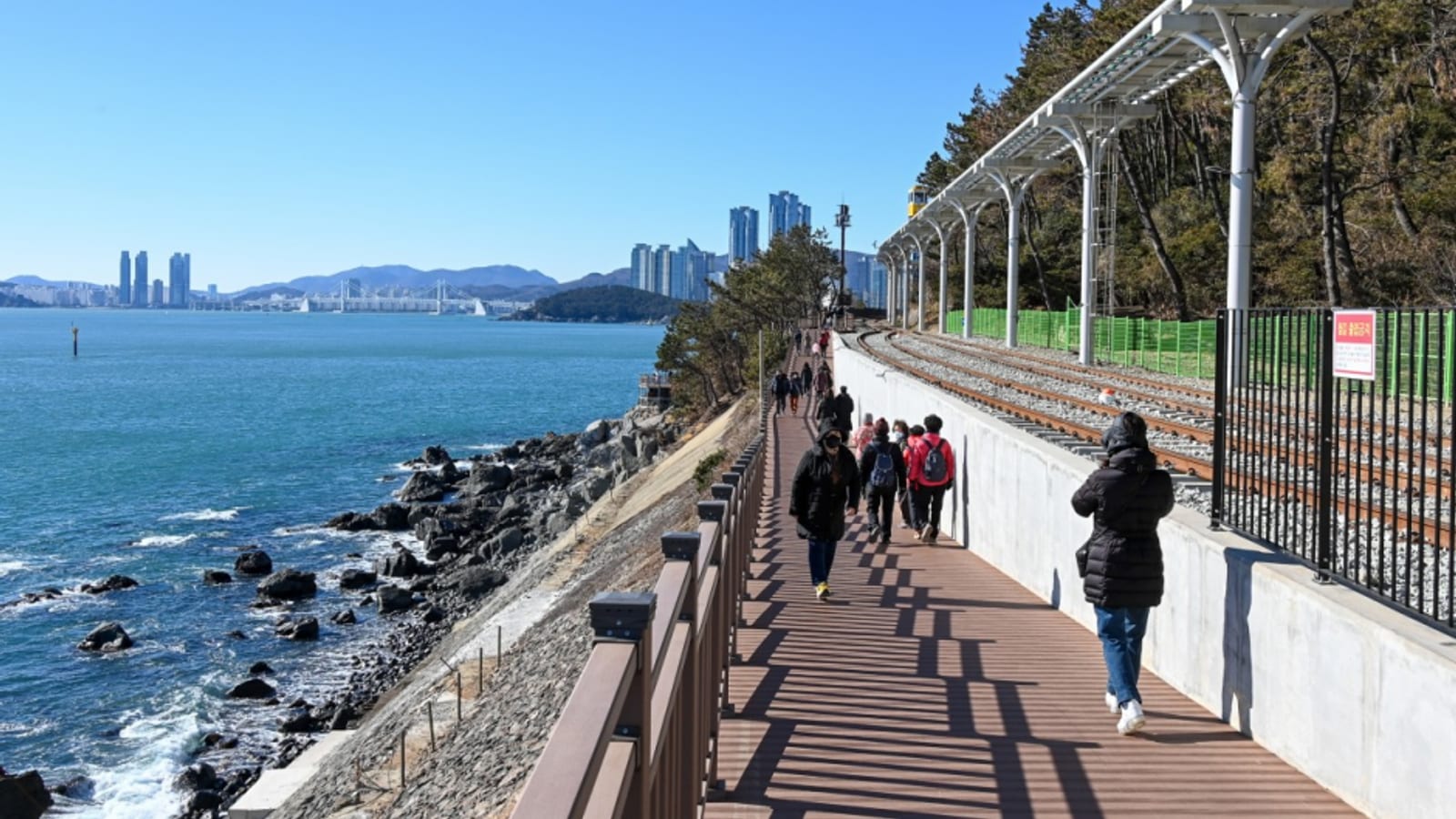
Haeundae makes sense when you want the waterfront to be an everyday part of the stay rather than a single sightseeing stop. Visit Busan’s destination guide highlights the beach, Dongbaekseom’s coastal walk and Haeundae Traditional Market. Those attractions provide the factual basis for treating this as a beach-focused option.
Our planning suggestion: pick Haeundae if your ideal morning includes a beach walk and you expect to spend substantial time in this part of Busan. Do not choose it only because the hotel photographs look like a holiday. Compare the route to the other places on your shortlist first.
Before booking, separate three things: a Haeundae district address, a hotel near Haeundae Beach, and a room with a guaranteed sea view. They are not interchangeable. Read the room category, locate the building entrance on a map and confirm how far you will walk with luggage.
For a short, busy itinerary, put each must-visit place into your map app. If most of your plans are elsewhere, a beach visit may fit better than a beach base.
Gwangalli: when your evening matters as much as your day
Korea Tourism Organization describes Gwangalli as a beachfront area with restaurants, cafes and views of the illuminated Gwangandaegyo Bridge in the evening. That combination makes it worth considering if your favourite part of a trip is a relaxed dinner followed by a waterfront walk.
Our planning suggestion: shortlist Gwangalli when you want to return to the same seaside setting at the end of the day. A couple planning slow evenings and a traveller planning early starts at several distant stops may weigh the same location very differently.
Be precise about the room. A sea view, a partial sea view and a bridge view can mean different things. Ask which view belongs to the room category you are buying, not the suite featured in the gallery. If quiet sleep matters, also read recent reviews about noise and ask the hotel about available room positions.
Gwangan and Geumnyeonsan appear on the official Metro Line 2 station listing. The best station for you depends on the hotel’s exact location. Compare both walking routes rather than choosing from the name of the beach alone.
Seomyeon: when your plans pull you in different directions
The Busan Transportation Corporation lists Seomyeon on both Metro Line 1 and Line 2. Korea Tourism Organization also documents its underground shopping area. Together, these support considering Seomyeon for travellers who want a city-and-shopping base with access to both lines.
Our planning suggestion: start with Seomyeon if your itinerary mixes market districts, shopping and beach visits, and you have not yet chosen a single area to prioritise. It is a useful candidate, not a promise that every attraction will be quick to reach. Some trips still need additional walking, a bus or a taxi.
Choose the hotel by entrance-to-station distance, not by a broad Seomyeon label. Look at the actual route with your suitcase and check whether your chosen exit has the access you need. For the room itself, compare window information, bed configuration and recent noise comments.
If waking up beside the sea is a central reason you are going to Busan, a practical inland base may feel like the wrong compromise. Convenience should support the trip, not replace the experience you want.
Nampo and Jagalchi: when markets are your main attraction
Visit Busan places Jagalchi Market beside the Nampo-dong waterfront and discusses it alongside Gukje Market and Bupyeong Kkangtong Market. It is a useful factual starting point for a market-oriented stay. Nampo and Jagalchi are also listed on Metro Line 1.
Our planning suggestion: consider this area if you want to browse markets, spend time around the older waterfront shopping district and keep those plans central to your visit. If your dream trip is mainly eastern beaches, compare the travel you would repeat before choosing a room here.
Nampo is a neighbourhood name, not a guarantee of the same setting outside every hotel. Map the exact entrance and check the walk to the station or market you plan to use. If you are adding a hill-side attraction or another district, inspect that journey separately; nearby on a city map does not automatically mean easy on foot.
Keep the hotel selection and food plans separate. A lively market nearby does not tell you anything about the room’s cleanliness, sound insulation or cancellation terms. Those still need their own checks.
Our first-trip decision rule
Make a list of your three non-negotiable activities. Put their locations on a map, then ask where you want to be when you are tired at the end of the day.
If the answer is the beach almost every day, compare Haeundae and Gwangalli. If you are combining several kinds of sightseeing and shopping, start by checking Seomyeon. If markets and the Nampo/Jagalchi waterfront are the main event, start there.
For only one or two nights, the arrival and departure journey can change the answer. Do not squeeze in every district to justify a hotel. Pick the experience that matters most and leave room to enjoy it.
For a longer stay, changing hotels is an option, not a requirement. Moving means packing, checking out, transporting luggage and checking in again. Only split the stay when the new location adds more to your trip than the move takes away.
Seven things to check before you book
Exact location: save the property’s actual address and map the entrance, not just the neighbourhood.
Room category: verify the bed setup, window and view for the exact rate you selected.
Final price: compare the total for all nights, guests, taxes and mandatory charges on the same basis.
Cancellation: note the deadline, the time zone used and the penalty after that deadline.
Arrival: confirm late check-in or luggage storage directly when your schedule depends on it.
Access: check the route with luggage and ask about lifts or step-free access if needed. A station name alone does not establish an accessible journey.
Recent reviews: look for repeated, specific comments on cleanliness, noise and the room type you plan to book. An overall score cannot answer every question.
Keep a screenshot of the selected room and its terms. If something essential is unclear, ask the property before paying rather than interpreting a photograph as a promise.
Frequently asked questions
Is Seomyeon the best area for every first-time visitor? No. Its presence on Metro Lines 1 and 2 makes it a useful starting point for a mixed itinerary. A beach-first traveller may prefer a beach base; a market-first traveller may prefer Nampo/Jagalchi.
Should I stay in Haeundae or Gwangalli? Compare how you want to spend the time around your hotel. Haeundae suits a beach-focused shortlist; Gwangalli is worth considering for evenings near the waterfront and bridge views. Then compare the exact properties and your other journeys. Neither label guarantees a good room.
Is a beach hotel still worth considering outside swimming season? It can be if you value the waterfront setting and walks. Decide using your actual dates and plans, then check the forecast and any activities’ operating conditions. Do not book on the assumption that swimming or a particular event will be available.
Can I see Busan without changing hotels? Yes, you can plan a trip around one base. The question is whether the journeys fit the time and energy you want to spend. Map each day rather than assuming every part of the city is equally convenient.
Does this guide recommend particular hotels? No. It helps you choose an area and assess a room. It contains no hotel stays claimed as firsthand experience, no live room prices and no verified individual hotel recommendations.
Your next step: shortlist three rooms, not thirty
Choose an area, then compare three rooms using the same dates and number of guests. Keep the total price, cancellation terms, exact location and room category side by side. Use the hotel’s official site and a booking provider to check the current terms; a listing is not an endorsement from us.
If you are still torn between a practical base and a beach view, imagine the trip without that view. Would you still be happy with the booking? Your answer often makes the next choice clearer.
Yours, from Korea.
Choose the room category as carefully as the district
Use a three-candidate sheet with the exact room name, guest count, beds, view wording, total stay price and cancellation cutoff. Separate a guaranteed room feature from a request: a bridge-facing room category is different from asking for a nice view in a generic category. Save the category description before paying.
For four adults, do not infer occupancy from a family-room label or a photograph showing a sofa. Obtain the permitted adult count and actual bedding from the property. A slightly cheaper room that needs an additional bed, another room or a long daily transfer may not be the lower-cost stay.
Continue planning
Continue with Busan in Two Days: A Coast-and-Old-Town Itinerary You Can Actually Use, Haeundae vs Gwangalli: Which Busan Beach Area Should You Stay In?, Gimhae Airport to Busan: Rail, Limousine Bus or Taxi for Your Hotel.